What to Include in an Industrial Machine Installation Plan
Installing industrial machinery is more than setting it in place. Positioning, alignment, anchoring, foundations, and coordination with other trades all influence the scope and the outcome. A clear installation plan keeps the project on schedule and the equipment running correctly afterward. This guide covers what to include.
Why an Installation Plan Matters
A machine that is installed without a plan tends to need rework — re-levelled after it settles, re-anchored when it shifts, or re-aligned when it does not run to spec. A plan addresses the conditions that cause those problems before the equipment arrives.
The plan also coordinates the trades involved. Electrical, mechanical, and rigging work all touch an installation, and sequencing them is what keeps the project moving instead of waiting on a missing step.
Site Preparation
The destination has to be ready before the machine is placed.
- Confirm the foundation or pad is prepared and rated for the load.
- Check floor levelness and condition at the placement location.
- Confirm utilities — power, air, water, drainage — are in place.
- Clear the access route for delivery and placement.
- Confirm overhead and door clearances for the equipment.
Equipment Access and Delivery
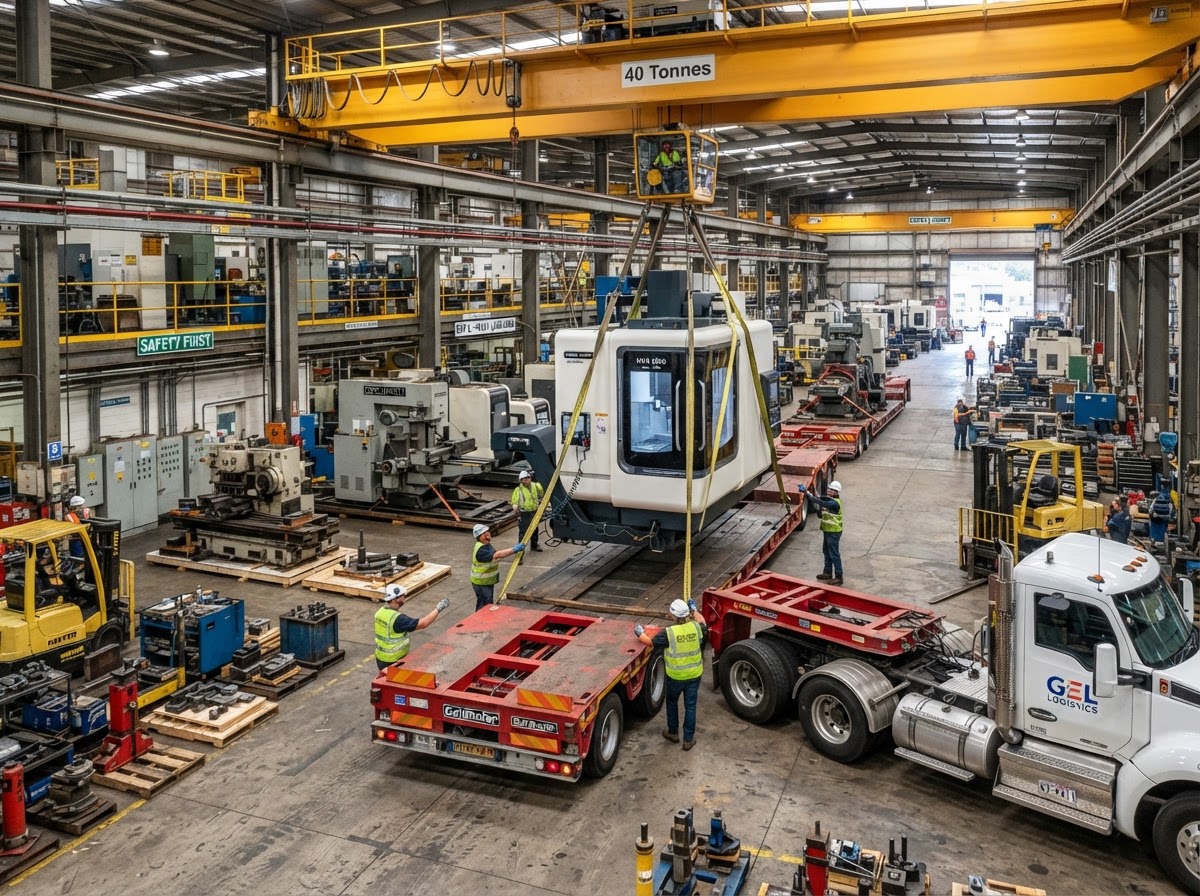
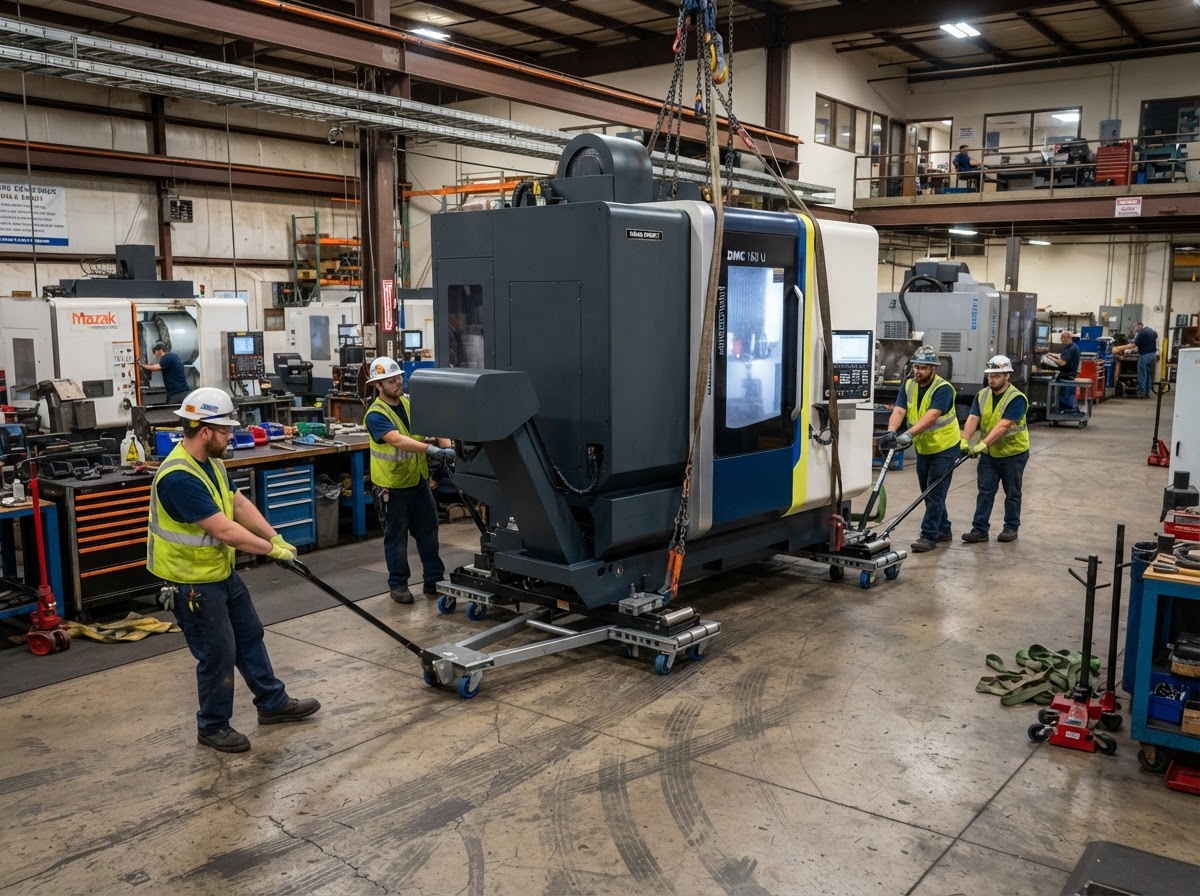
Plan how the machine reaches its installation location. For equipment arriving from outside, that means dock access, the route from dock to pad, and any rigging required to place it. For equipment being repositioned internally, it means the movement path and the handling method.
Access planning catches problems like a door that is too narrow or a corner that will not turn before they stop the installation on the day.
Placement, Alignment, and Anchoring
Once the machine is at its location, installation work brings it into service.
- ▸Position the machine in its final location.
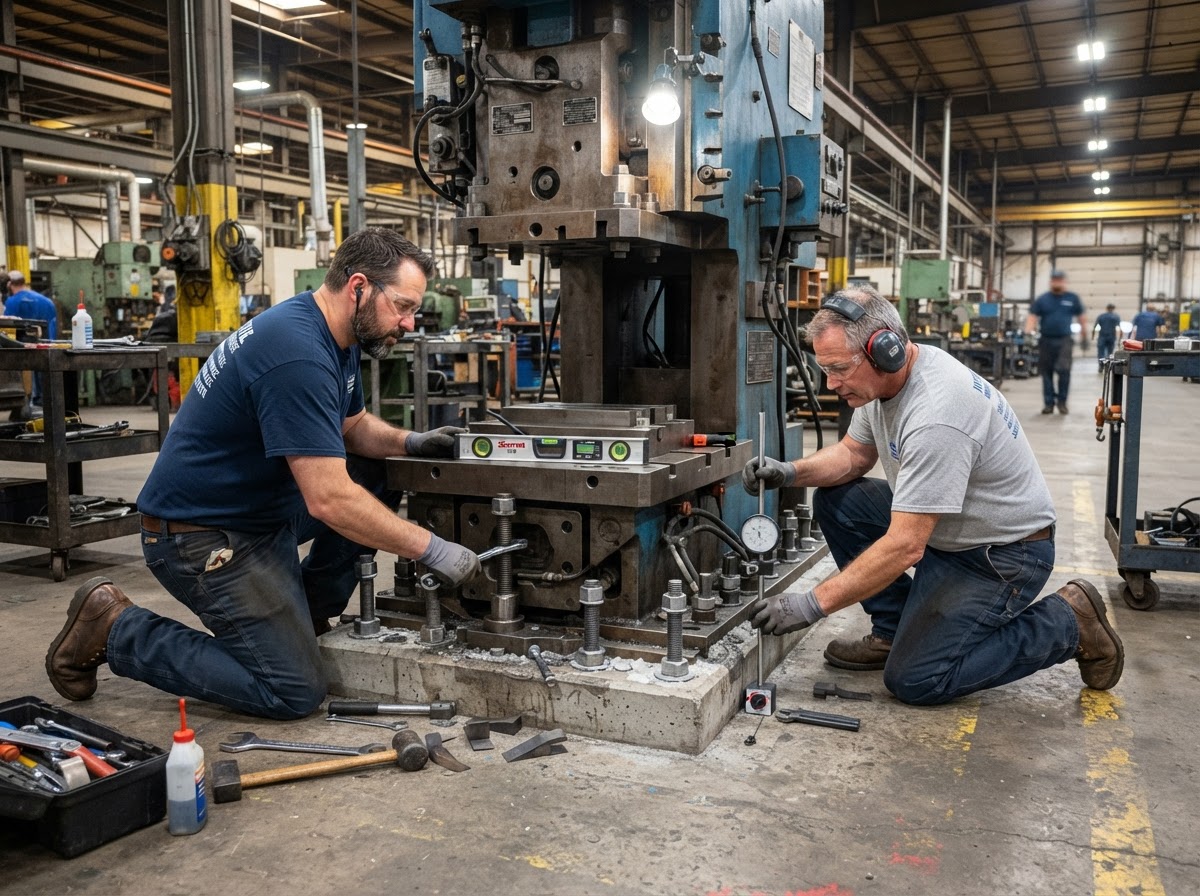
- ▸Level the machine to specification.
- ▸Align the machine to foundations, drives, or adjacent equipment.
- ▸Anchor the machine to its foundation or pad.
- ▸Complete the mechanical assembly required.
Trade Coordination
Most installations involve more than one trade. Electrical disconnection and reconnection, utility tie-ins, and any process piping all have to be sequenced with the mechanical installation. Coordinating those trades on one timeline is what keeps the project from stalling between steps.
Scope Boundaries to Confirm
Be explicit about what is and is not included, so the installation is not assumed to cover work it does not.
- ▸Electrical connection and reconnection by a licensed electrician.
- ▸Utility tie-ins — air, water, gas, process lines.
- ▸Calibration, testing, and commissioning.
- ▸Foundation or anchoring preparation.
- ▸Permits or inspections where required.
Common Questions About This Topic
Discuss Your Equipment Project
Ready to scope a machinery move, installation, or relocation? Start with a direct conversation.