How to Prepare a Factory for a Heavy Machinery Move
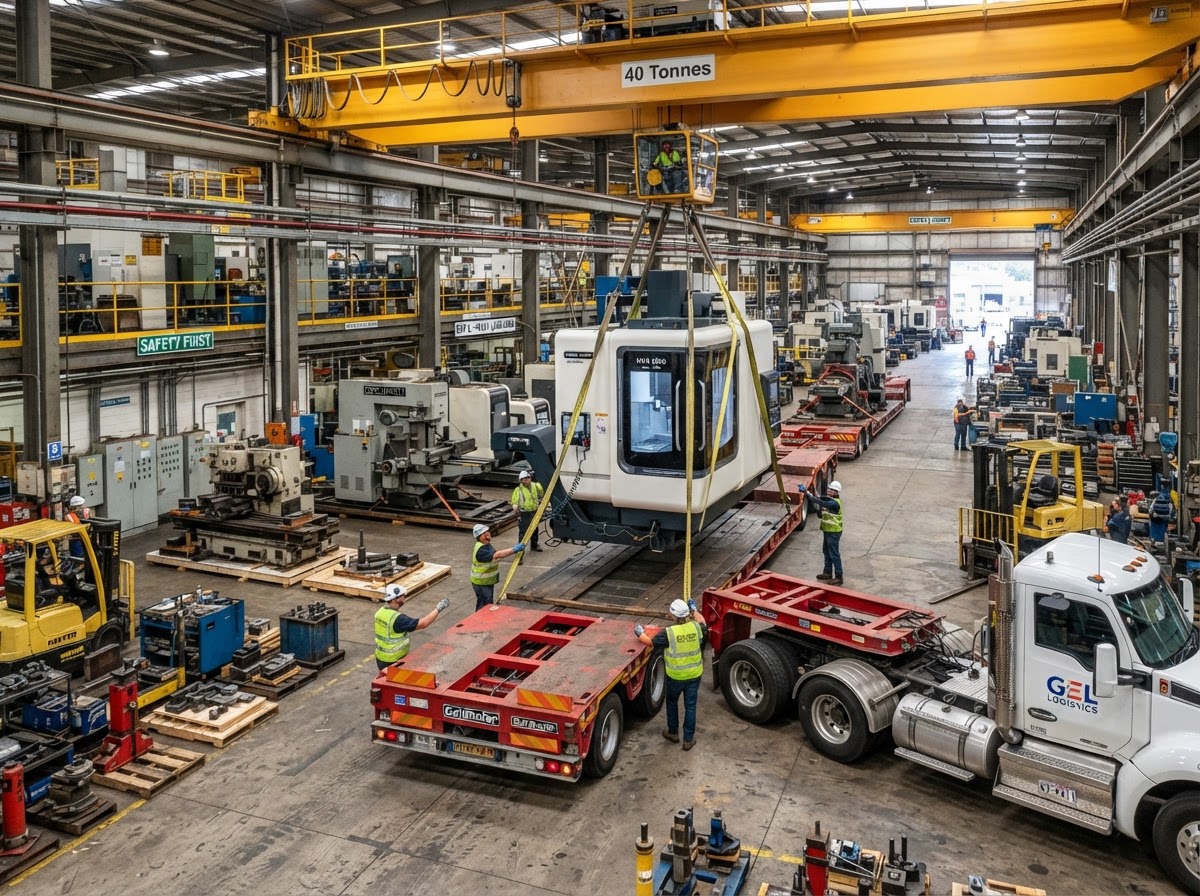
A heavy machinery move is far easier — and far less disruptive — when the facility is prepared before the handling crew arrives. Most problems on moving day come from conditions that could have been addressed earlier: an aisle still blocked, a utility still live, or a neighbouring line still running. This checklist helps you prepare the access, utilities, schedule, and coordination that a machinery move depends on.
Why Preparation Matters
Industrial equipment is heavy, often top-heavy, and sensitive to shock and tilt. The route it travels, the floor it crosses, and the space around it all have to be ready before the move starts. Preparation protects the machine, the floor, the adjacent equipment, and the production schedule around it.
When preparation is skipped, the move either slows down or creates risk. A clear, prepared path lets the handling crew work to the agreed plan instead of solving problems on the fly.
Access and Route Preparation
Clear the path the equipment will travel and confirm it will stay clear through the moving window.
- Clear the full movement route of pallets, materials, and obstacles.
- Confirm door and overhead clearances along the route.
- Identify any ramps, trenches, or floor transitions and plan for them.
- Check that turning radii at corners are workable for the equipment size.
- Note overhead lines, lights, or utilities in the path.
- Confirm dock or loading access if equipment is leaving the building.
Utilities and Disconnection
Machinery usually needs to be disconnected from utilities before it can be moved. Some of that work requires licensed trades and should be scheduled ahead of the move.
- Arrange electrical disconnection by a qualified electrician.
- Disconnect or cap air, water, gas, and process lines.
- Drain fluids and secure any connections that could leak in transit.
- Confirm the machine is isolated and safe to handle.
- Document what was disconnected so reconnection is straightforward.
Floor and Adjacent Equipment Protection
Heavy point loads and movement can damage epoxy coatings, tiles, or trench covers, and vibration can affect neighbouring machines. Plan protection before the move.
- ▸Identify floor coatings or sensitive surfaces along the route.
- ▸Plan steel plates or heavy sheeting where point loads are a concern.
- ▸Protect or brace adjacent equipment that could be affected.
- ▸Confirm trench covers are rated for the load or reinforced.
Scheduling and Coordination
Coordinate the move with the facility's operating schedule so the handling window does not collide with production.
- Choose a window that avoids active production where possible.
- Inform neighbouring departments or tenants who share access.
- Confirm any shared docks or aisles are available for the window.
- Align disconnection, move, and reconnection trades on one timeline.
- Have a contact on site who can make decisions during the move.
Information to Share With Your Mover
The more your mover knows in advance, the more accurately the move is planned. Share equipment details, photographs of the route, and any known constraints early in the conversation.
Common Questions About This Topic
Discuss Your Equipment Project
Ready to scope a machinery move, installation, or relocation? Start with a direct conversation.