How to Choose an Industrial Machinery Moving Company in Ontario
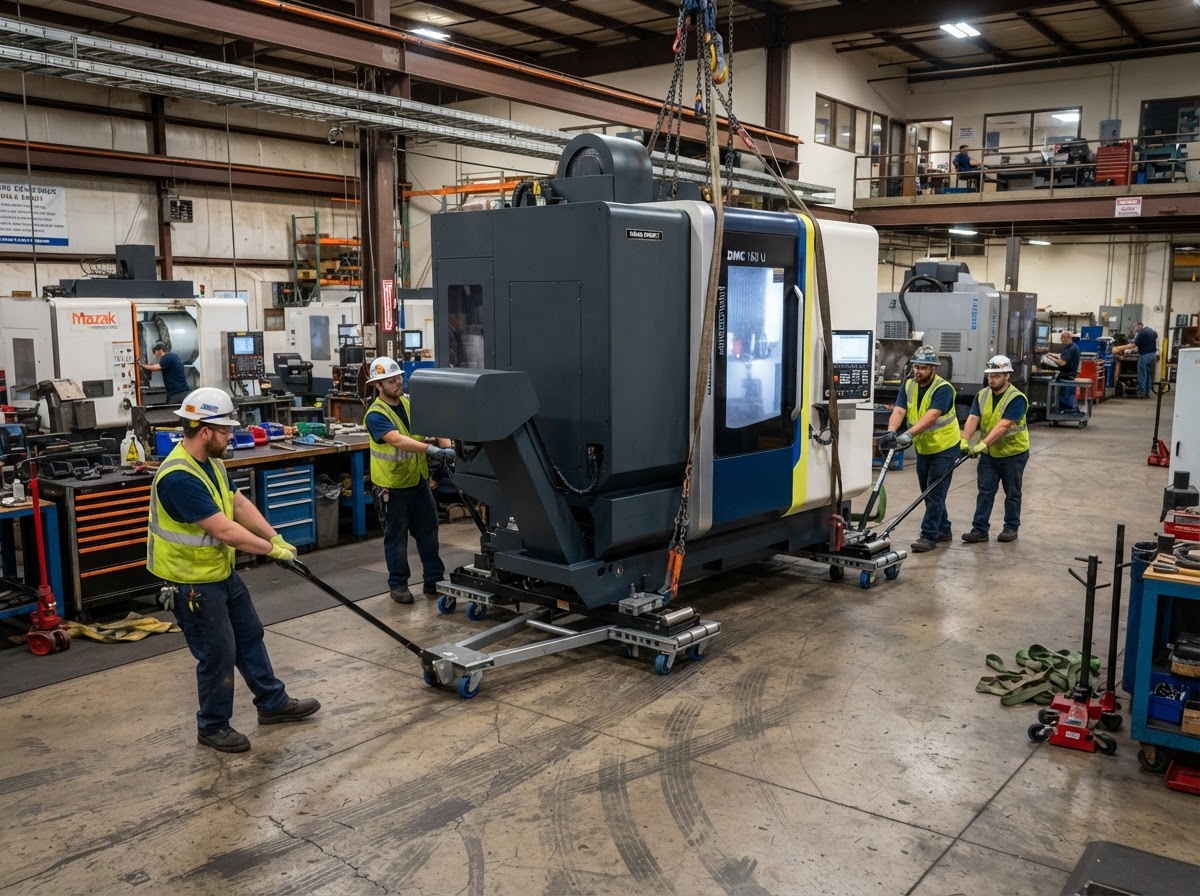
Choosing an industrial machinery moving company is not the same as choosing a general mover. Industrial equipment is heavy, often sensitive to shock and tilt, and constrained by the building it sits in. The right partner treats the relocation as a planned industrial project — understanding the load, the route, and the destination before any equipment is moved. This guide walks through what to look for and what to ask before you hire.
Start With the Equipment, Not the Truck
Moving industrial machinery is a planning problem first and a lifting problem second. A capable machinery mover will ask about the machine — its weight, dimensions, sensitivity, and how it is anchored — before talking about trucks or rates. If a quote arrives without those questions, it is usually based on assumptions that do not hold up on site.
The equipment and the building it sits in shape the entire project. Door heights, floor load ratings, overhead clearances, and the route from origin to destination all determine what is actually possible on the day. A mover who scopes those conditions upfront is working from the job, not from a generic template.
What to Ask a Machinery Mover Before You Hire
The questions below help you tell a planned industrial move apart from a one-size-fits-all quote. A contractor who can answer them clearly is usually thinking the project through before it starts.
- ▸How do you assess the load and the movement route before quoting?
- ▸What handling methods do you use for equipment of this weight and sensitivity?
- ▸How do you plan around an active production schedule or a shutdown window?
- ▸What information do you need from us to scope the move accurately?
- ▸How do you coordinate transportation, rigging, and installation if more than one is required?
- ▸How do you protect factory floors, adjacent equipment, and the machine itself during the move?
Capabilities That Matter for Industrial Moves
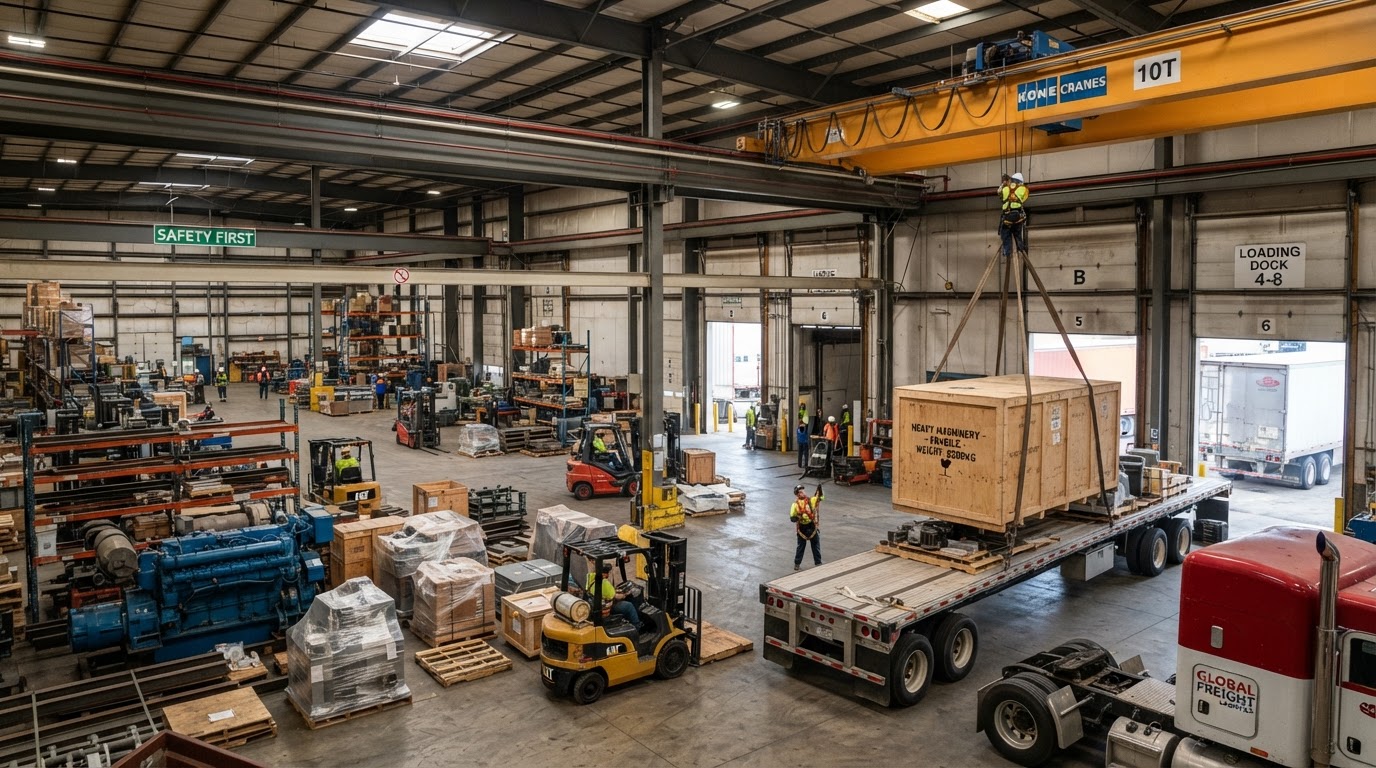
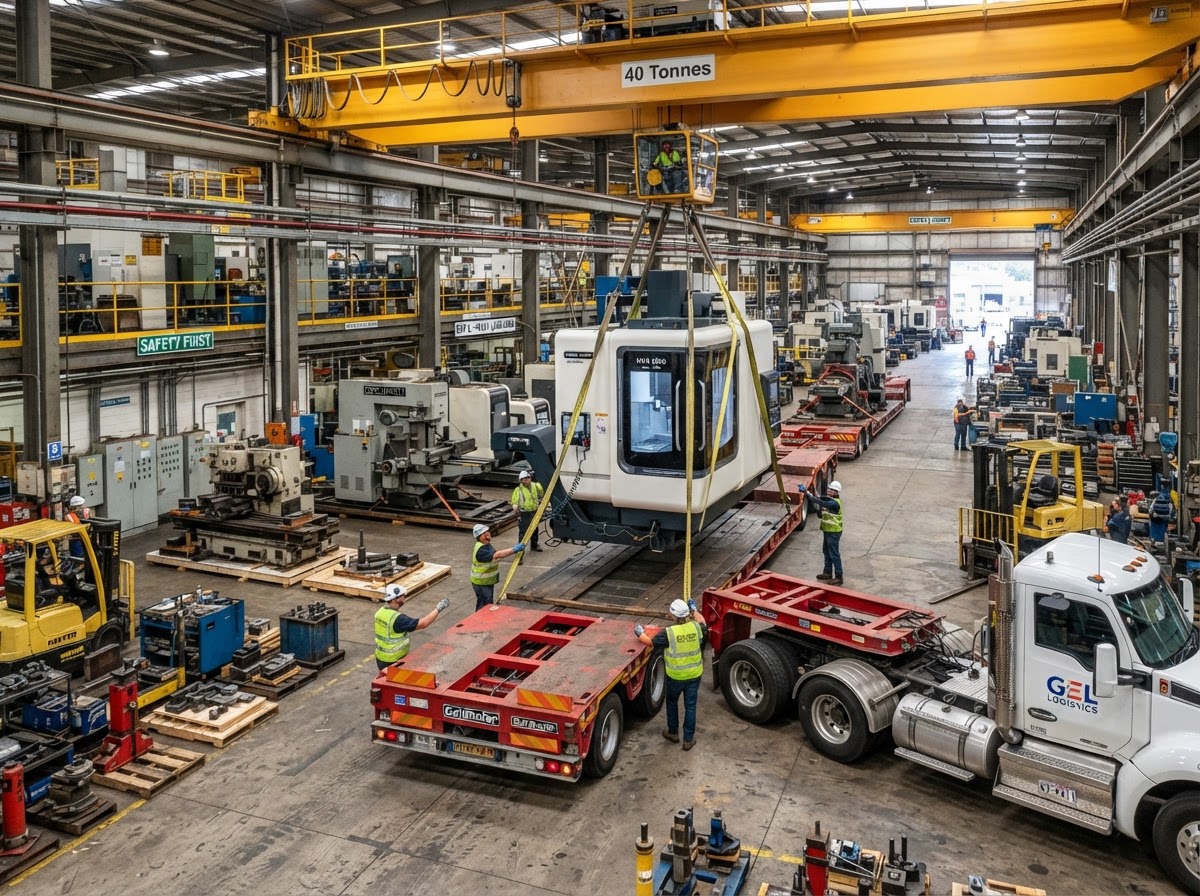
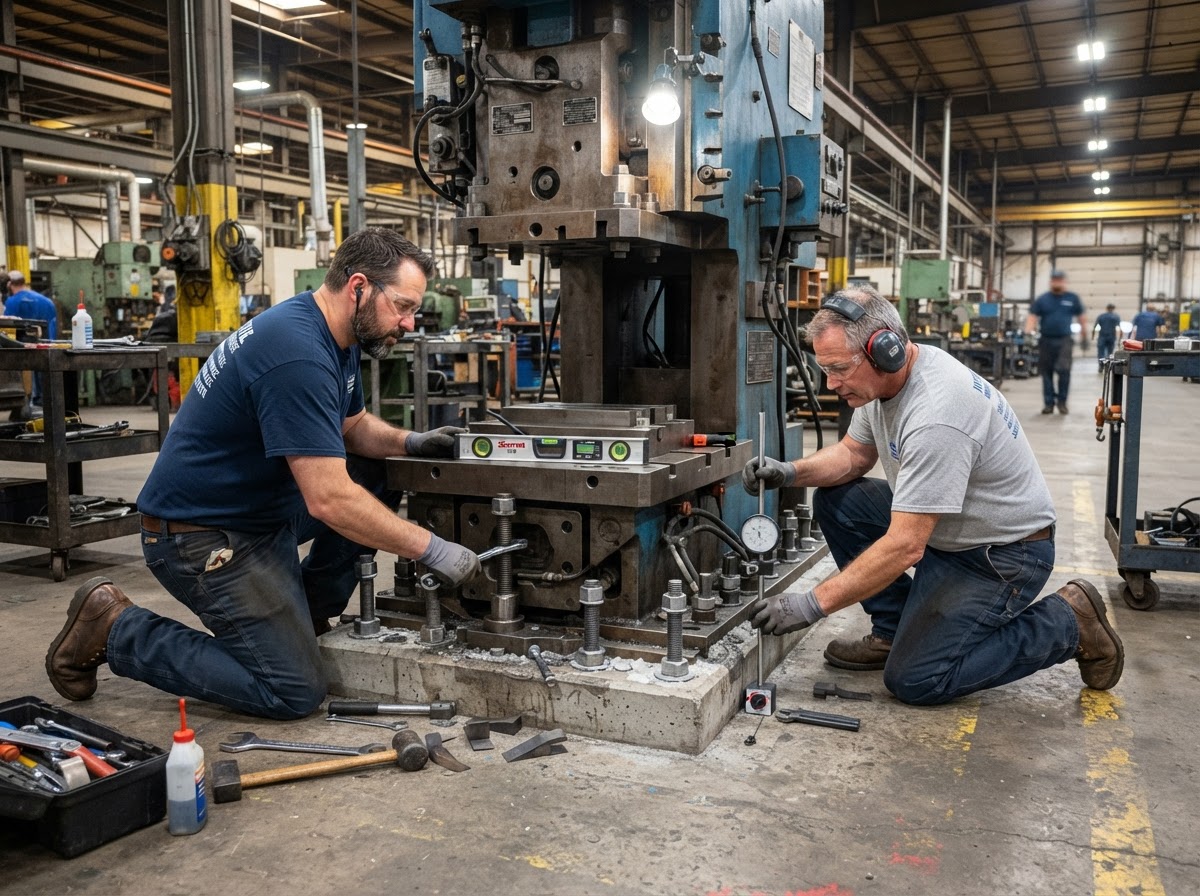
Most machinery projects touch more than one discipline. A move may require rigging for a heavy lift, millwright work for placement and alignment, and transportation coordination for the haul between facilities. Working with a contractor who can scope the full sequence — or coordinate the trades that complete it — reduces the hand-offs where projects slip.
- ▸Machinery moving and internal equipment repositioning.
- ▸Industrial rigging for heavy, tall, or awkward lifts.
- ▸Millwright and machine installation support.
- ▸Heavy equipment transportation and route coordination.
- ▸Crating, storage, and staging where the project requires it.
Site Access Questions a Good Mover Will Raise
A mover who understands industrial work will raise access conditions early, because they change the handling method and the schedule. Expect questions about door and overhead clearances, floor coatings and load ratings, trench covers, turning radii, and any overhead lines or utilities in the path.
If those questions never come up, the move is being planned on paper rather than against the real conditions in your facility. That gap is where damage, delays, and unplanned downtime usually start.
Red Flags to Watch For
A few signals suggest a contractor is not planning the job the way industrial equipment demands:
- ▸A fixed quote with no questions about the equipment, access, or schedule.
- ▸No discussion of floor protection or adjacent equipment.
- ▸No conversation about working around production or shutdown windows.
- ▸No clear answer on who handles rigging, transportation, or installation.
- ▸Pressure to commit before the scope is understood.
Local Knowledge Across the GTA and Ontario
Facilities across Toronto, Brampton, Mississauga, and Vaughan vary widely — from older multi-tenant buildings with tight access to large purpose-built plants with generous clearances. A mover who works across those environments understands that the same machine can be a straightforward move in one building and a complex rigging project in another.
Local context matters for scheduling too. Shared docks, neighbouring production lines, and shift patterns all influence when equipment can be handled without disrupting the facility around it.
Common Questions About This Topic
Discuss Your Equipment Project
Ready to scope a machinery move, installation, or relocation? Start with a direct conversation.